Yoga Retreats: ‘gluten free’ isn’t the same as coeliac-safe
I want to talk about a topic that is incredibly important yet too often is not taken seriously enough in group spaces. I work in the wellness industry, and despite there being many places within this space that offer gluten-free options, there are many that do not fully understand coeliac disease and the specific steps that need to be taken to truly label a meal “gluten-free”. This article is essential reading for anyone who runs retreats, or workshops/ yoga teacher trainings that involve communal meals.
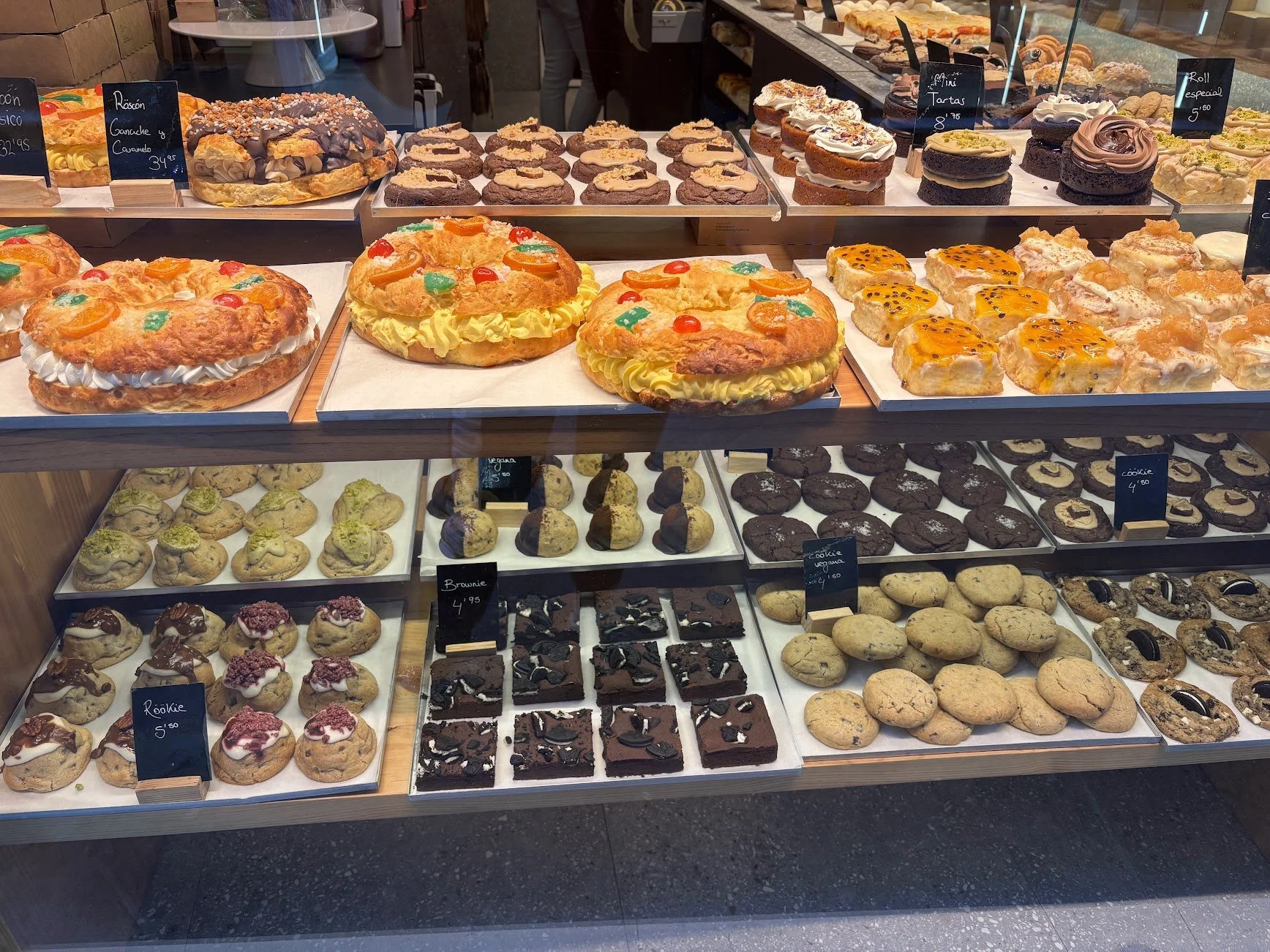
A 100% gluten free bakery in Seville called Chök
People often ask me what food I miss most as a coeliac. My answer is always “It’s not a specific food I miss most, it’s being able to relax around food. One of the hardest parts of coeliac, for me, is trying to educate people and advocate for myself when there’s still such a lack of awareness and understanding. If I see a kitchen surface covered in crumbs, I see instant danger. I have to really explain how important it is to avoid cross contamination between gluten free food and gluten. I miss not having to worry about that.”
Coeliacs too often end up feeling left out, unsafe, or on edge around food even when everyone involved is kind, well‑intentioned, and genuinely trying their best.
There might be plenty of gluten free options. Food might be labelled, at least most of the time. Staff may be warm, responsive, and caring.
But without specific coeliac‑aware practices and protocols in shared food spaces, all the good intentions in the world don’t equal food safety for those living with coeliac disease.
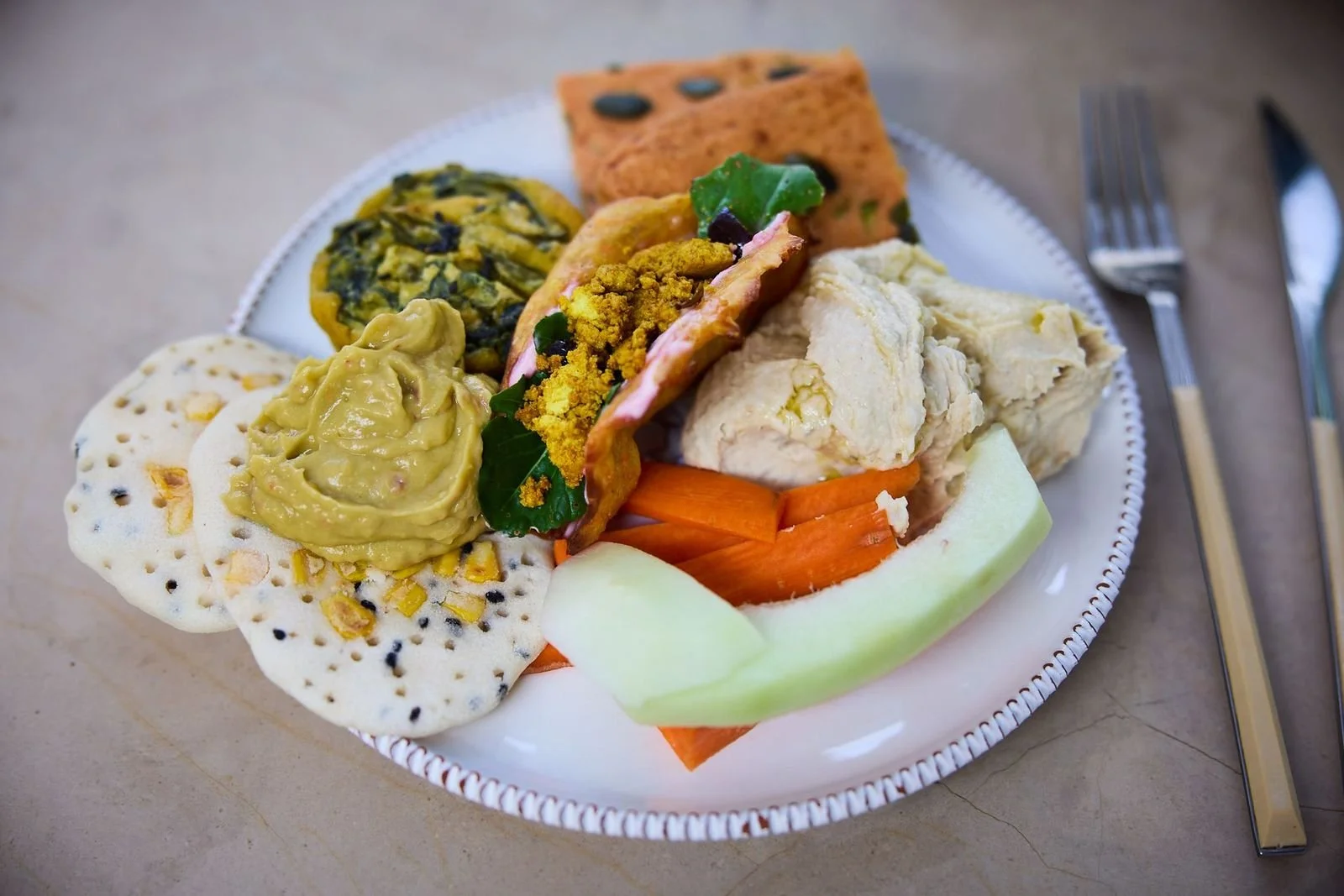
A delicious plate of gluten-free coeliac safe food at YogaPulia in Italy on our 2024 Yoga retreat taken by David Lindsey
A quick intro for anyone who doesn’t know: what coeliac disease is
Coeliac disease is a serious autoimmune condition. I’d like to highlight that this is not a preference, allergy, or intolerance.
When someone with coeliac disease eats gluten even in very small amounts e,g, a crumb, their immune system attacks the lining of the small intestine. This can lead to all kinds of different symptoms, which may be immediate after ingesting gluten or delayed.
It can also lead to:
Malabsorption of nutrients
Fatigue, brain fog, pain, and systemic inflammation
Long‑term complications if exposure is repeated
In the UK, around 1 in 100 people are estimated to have coeliac disease, yet many remain undiagnosed. You can read more about that in my other blog post Why Coeliac Disease Goes Undiagnosed — A Personal Story and Call for Better Awareness.
Currently, the only treatment is for coeliacs to follow a strict gluten-free diet for life, including being very careful about cross contact risk between gluten-free foods and food containing gluten.
A coeliac can be “glutened” (meaning to accidentally ingest gluten) by something the general population may assume is gluten-free or harmless to a coeliac such as a splash of soy sauce, a shared serving spoon, crumbs in a butter dish, or a “gluten free” meal coming into contact with a gluten food at a buffet due to lack of precautions taken to keep them separate.
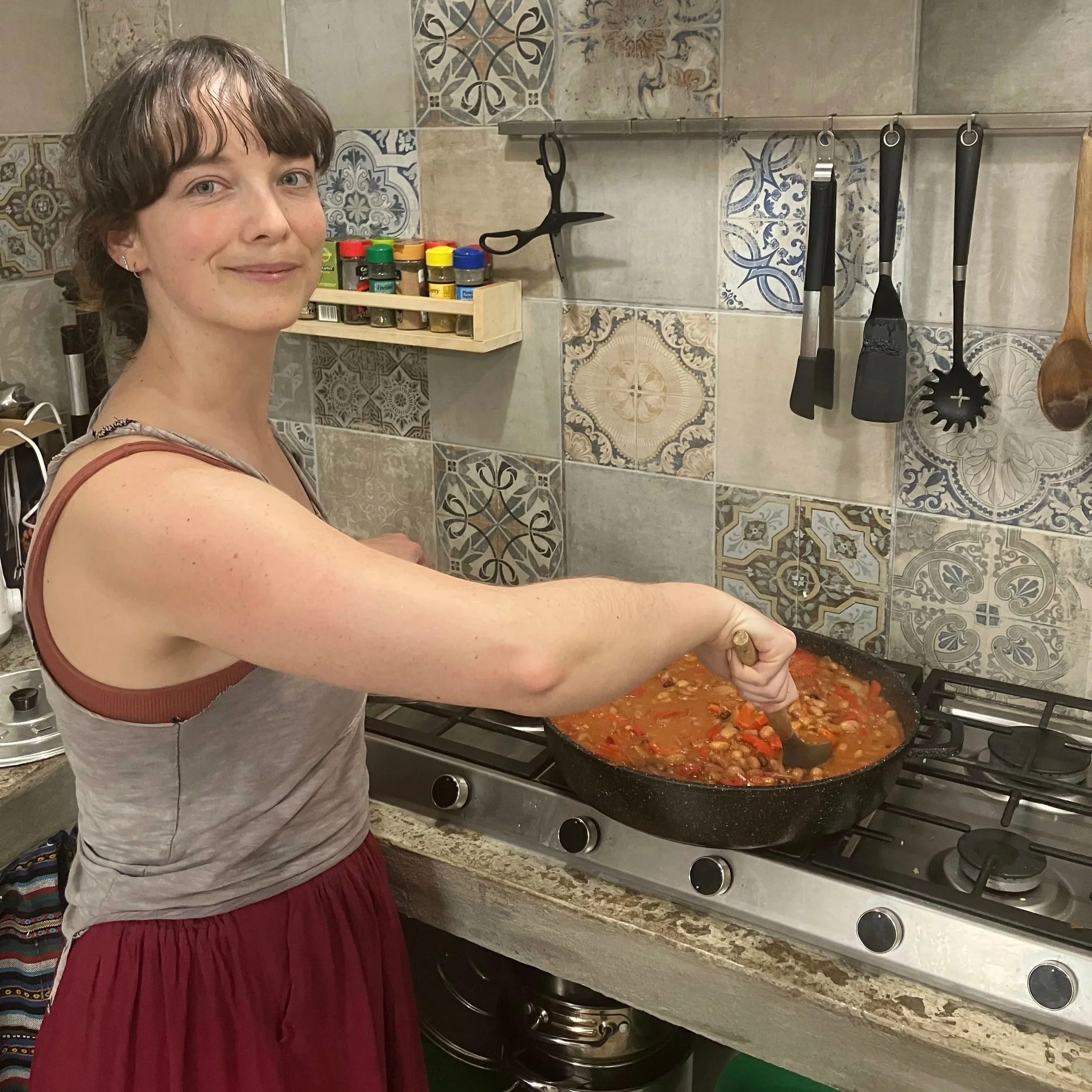
Photo taken of Jas helping to cook a coeliac safe gluten free a communal meal at Cactus Co-Living in La Gomera where the community manager, Rebecca, was amazing at allergen aware practices.
Where things often fall down in shared settings
In group environments, retreats, workshops days, communal kitchens, coeliac safety often quietly becomes the responsibility of the coeliac person alone, even in places that say they can cater to coeliacs and gluten free diets.
This can look like:
Shared buffets where cross‑contact is highly likely - it can be risky, especially in big groups, when everyone flocks to the buffet table and self-serves
Communal pots of spreads (butter, jam, hummus) when gluten bread is present - most people double dip the knife from bread to spread which can leave crumbs in the shared pot making it unsafe for coeliacs
No clear briefing to non‑coeliacs about avoiding cross‑contact
Inconsistent or unreliable labelling (I went to one very popular retreat centre in Spain that nearly glutened me not once, but twice due to incorrect or missing labels! If I hadn’t triple checked, I'd have been very unwell.)
Which all leads to the coeliac:
Having to double or triple‑check ingredients every time
Feeling hyper vigilant around food, making it difficult to switch off and relax
Having to decide whether it feels safer to opt out entirely and therefore miss out on the shared experience around food, and potentially go hungry
Most of this is invisible if you don’t live with coeliac disease. But the impact is huge for those of us with coeliac! Instead of just eating, chatting, and resting with the group, as a coeliac you can end up:
Doing constant risk assessments
Staying hyper‑vigilant
Managing your own safety
Using huge amounts of mental energy and ending up in an activated nervous system state from the stress of having to be so “switched on” all the time and alert to what’s going on with the food
Access is about safety, inclusion and belonging
Accessibility isn’t only about whether there are gluten free options available.
It’s about whether, in shared spaces, coeliac people are held by the set‑up itself, and able to be a part of the group experience. Whether there are clear protocols, consistency and follow‑through. Ultimately it’s about whether care is shared, with someone taking the appropriate action to meet the access need, or whether the risk is placed on one person, left to carry the burden alone
“We welcome everyone!” is completely different to “we specifically built this in a way that ensures your access needs are met so that you feel truly welcome, and so that you can actually join in”
When systems are coeliac‑aware, we can relax, which is usually the whole point of going on a yoga retreat!
With the right processes in place to include people with coeliac, rest, belonging, and connection become possible. Without those systems in place, coeliacs are paying the same amount to attend the retreat, workshop, or training, but do not have equal access to the relaxation on offer to the rest of the group. This goes for people with allergies, and intolerances, too.
Gratitude for kitchen teams and ensuring accountability can co-exist
As a coeliac myself, I am so grateful for the effort so many kitchens, chefs, and teams put into gluten free food.
But “gluten free” and “coeliac‑aware” are not the same thing. And all the kindness in the world doesn’t equal me having coeliac safe food and being able to switch off at meal times without having to remain hypervigilant.
I recently went on two different retreats, in two completely different settings, where had I not been vigilant in triple checking coeliac suitability about the food on my plate, I would have ingested gluten and been made very very unwell as a result.
On both occasions, I had of course been in contact ahead of time to discuss my coeliac needs and had been assured about the gluten free food. I had then had a further conversation upon arrival. I did all my due diligence, and yet, mistakes still happened.
Without behind‑the‑scenes systems and set policy, without consistency, training, and shared responsibility, food can still be inaccessible, even when it looks generous, abundant and is made with love and the best intentions.
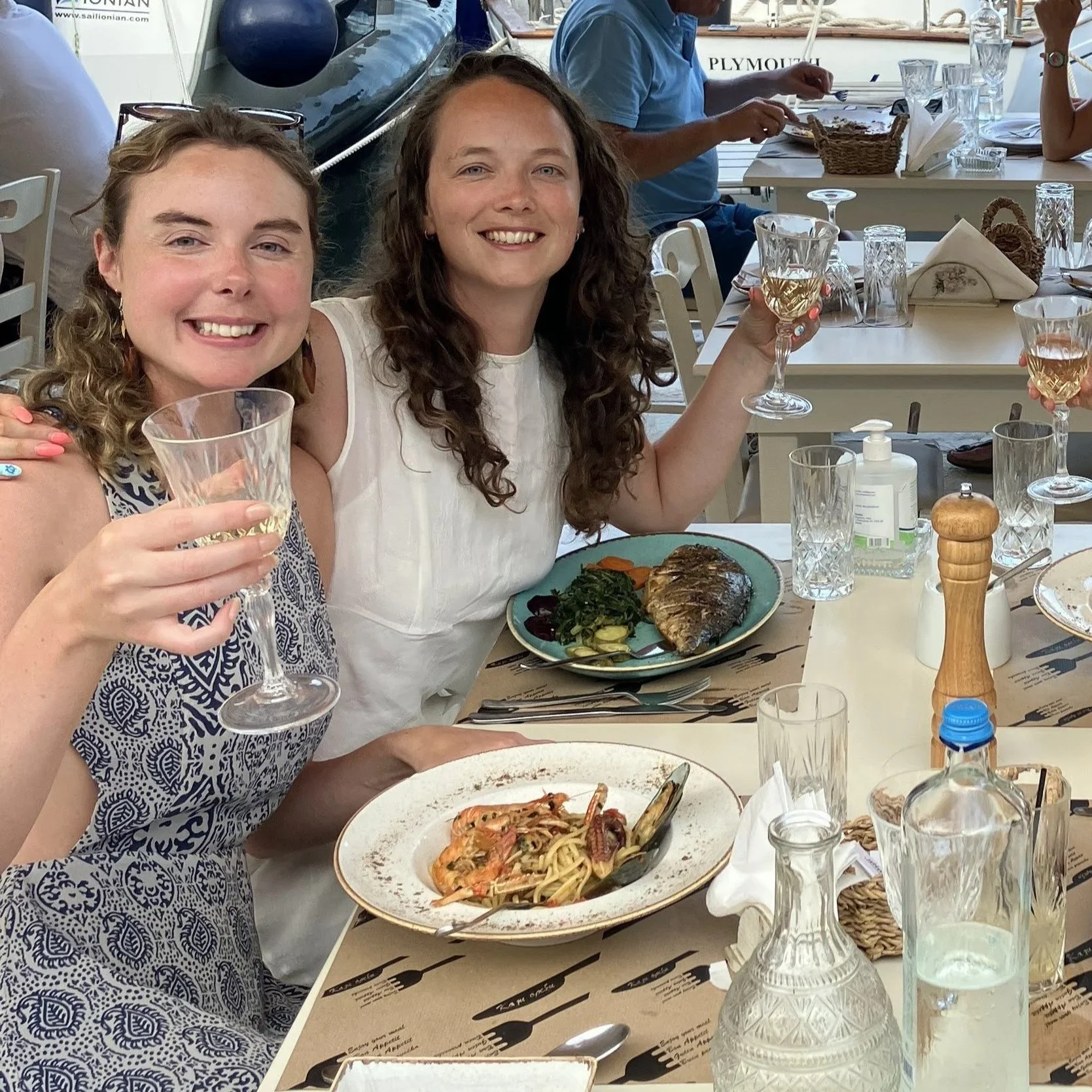
A friend and I enjoying a gluten free meal in Greece after running a 2024 retreat at Vericoco (who are also amazing for gluten free food and inclusion!)
Shared care means inclusion, safety, and ease for coeliacs
The following practices make a huge difference to whether coeliac people can feel safe, included, and at ease around food:
Some things that help coeliac people feel safe and included at communal meals:
Gluten free food set aside before it reaches a shared buffet with gluten where the self‑serving risks cross contact between dishes.
Separate spreads such as jams and butter, not communal jars for everyone if there’s gluten bread involved.
Clear, reliable labelling (every time).
A short explanation to the group about cross‑contact so non coeliac people are aware of how to be careful for the coeliac(s).
In restaurants / hotels / retreat centres, an appointed person takes responsibility for dietary needs so a clear point of contact to offer reassurance and support.
Allergens are clear to the kitchen team, and clearly marked on all foods in shared buffets.
Avoiding ingredients in a packet that say “May contain gluten / May contain wheat/ Made on a manufacturing site that handles cereals containing gluten” etc.
Consistency and follow‑through, not just good intentions!
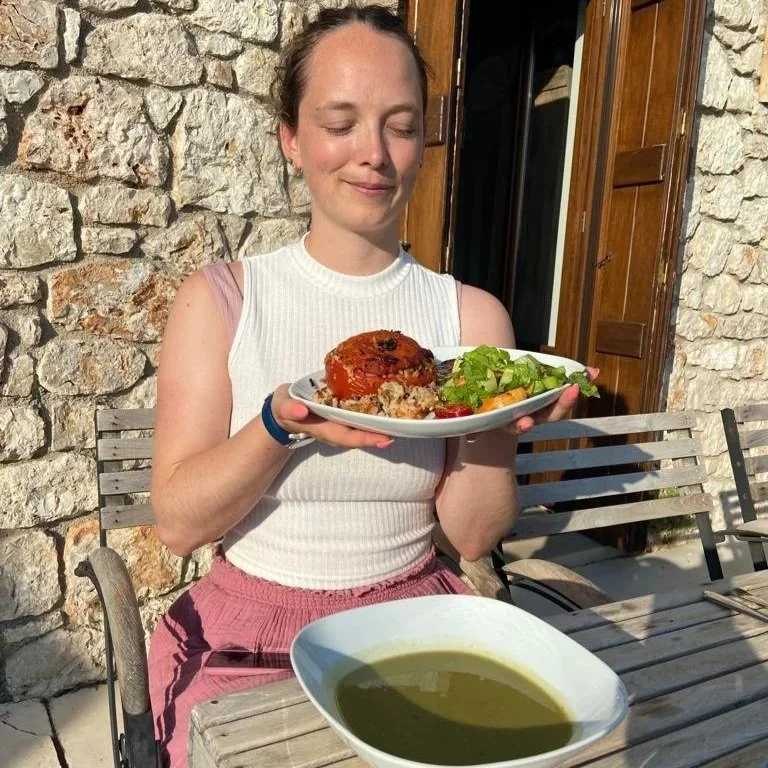
Enjoying one of many delicious gluten free meals at itha108 where we hosted a yoga retreat in 2023.
This matters to me, and is key in how I run my retreats
Inclusivity isn’t a buzzword for me or a word used in marketing but not truly embodied in practice. I see inclusivity as needing to be embedded in my systems, not just my values statement.
When I host retreats, coeliac safety isn’t an afterthought or a single question to the kitchen about whether they “do gluten free”.
It means:
Asking how gluten free food is prepared
Checking cross‑contact protocols
Ensuring clear ownership and communication
Creating structures that mean coeliac guests don’t have to stay on high alert, so they can actually switch off and relax like everyone else
If you’re coeliac and considering coming on retreat with me: I’ve got you.
And if you’re reading this as a yoga teacher, facilitator, or retreat host:
Please know it’s not enough to ask whether a kitchen can offer gluten free food.
If you’re responsible for bringing people into a shared food space, you’re also responsible for checking whether that space is genuinely coeliac‑safe and able to meet your group’s access needs. Don’t let the responsibility lie on the person who has the access need alone.
A rallying call to action
If you’re coeliac: you’re not ‘fussy’, difficult, or overreacting. I’m sure you already know this, but sometimes it’s nice to hear it! Every time we, as coeliacs, advocate for ourselves, we’re advocating for our entire community and increasing education and awareness which = greater safety for us all.
If you’re non‑coeliac: learning about cross‑contact is an essential way to show up for those with coeliac disease and/or allergies and share care.
If you run retreats or group events: coeliac‑aware systems are non-negotiable, inclusivity is not optional!
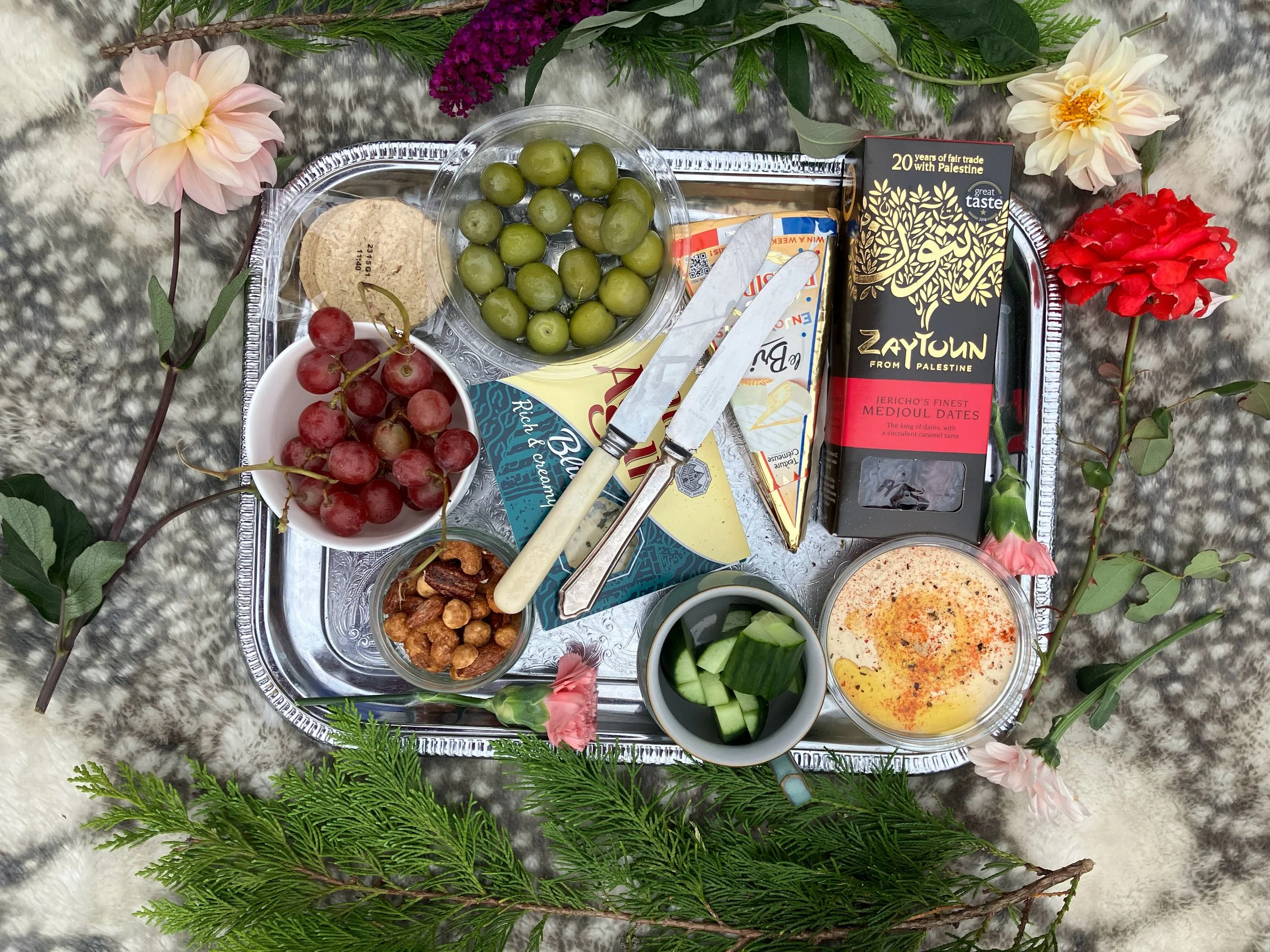
A snack platter for the Full Moon that my friend and I enjoyed together.
At its heart, for me, this entire conversation is about belonging. Breaking bread and sharing food is an ancient bonding experience. Being left out of that can be an upsetting experience because when there’s no safe food available it’s literally like being told “you don’t belong with us.”
As a coeliac myself, I do understand there is a level of personal responsibility. We all have to learn to advocate for ourselves, to ask the right questions, to double check. We all end up having to constantly educate non-coeliacs. We do what we need to do to stay safe in food settings that more often than not aren’t built with us in mind.
But when the full weight of ensuring food safety sits on one person, it can be an isolating experience. True inclusion, true accessibility, and true belonging happen when that responsibility is shared. When you know other people in the group, and importantly the group organiser, have got your back and are making sure you’re included.
A Final Note on Something People Commonly Misunderstand About Coeliac
The most common question I am asked by restaurants or kitchen staff is “it depends on how severe your coeliac is? Is it really serious?” This question implies that there are different levels to coeliac disease, when in reality, any person with coeliac disease ingesting gluten is serious. All coeliacs need to follow a strict gluten free diet and avoid cross contact with gluten.
There is a difference in the symptoms people have after ingesting gluten. For example one person may end up with such severe symptoms that they need to go to hospital, whereas another may present with less symptoms, or, if they are a “silent coeliac” they may show no symptoms at all. But the key fact is that the same internal damage can occur for any coeliac regardless of how disruptive or severe their outward symptoms are.
Medical guidance is that all people with coeliac disease avoid “May contain gluten” labels and follow a strict gluten free diet for life.